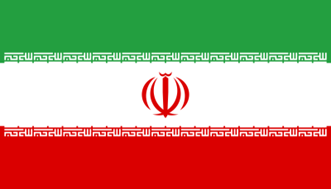
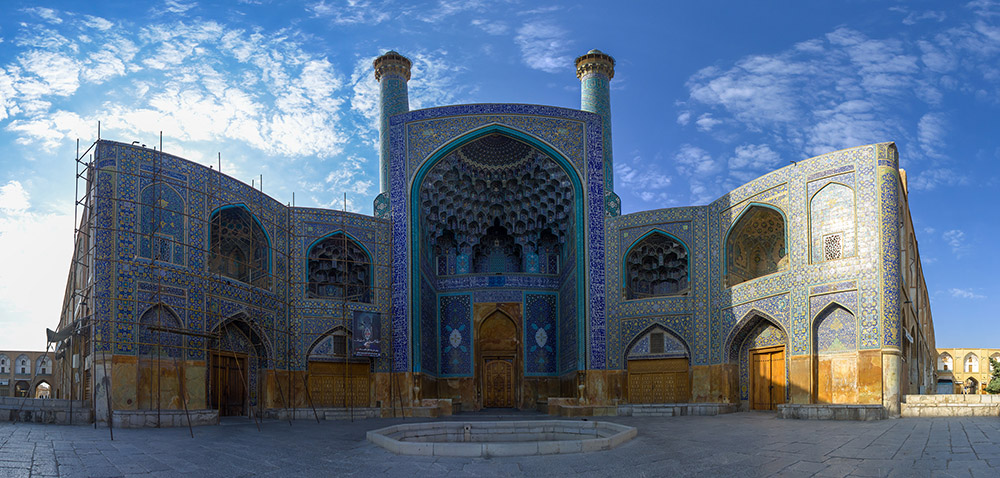
Iran (pronounced ee-RAHN), historically called Persia, is a country situated on the silkroad crossroads of the Central Asian, South Asian, and the Arab states of the Middle East.
It shares land-borders with Afghanistan, Armenia, Azerbaijan, Iraq, Pakistan, Türkiye, Turkmenistan; and maritime borders with Kazakhstan & Russia in the North through the Caspian Sea, and Bahrain, Kuwait, Oman, Qatar, Saudi Arabia, and the UAE in the South through the Persian Gulf.
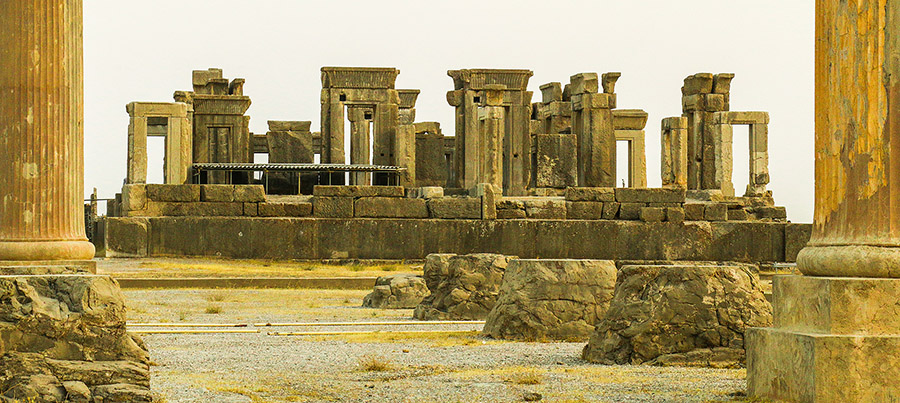
Iran in brief
With a surface area of 1648,195 km², Iran is almost five times the size of Germany, over three times the size of France, but just shy of the size of Alaska.
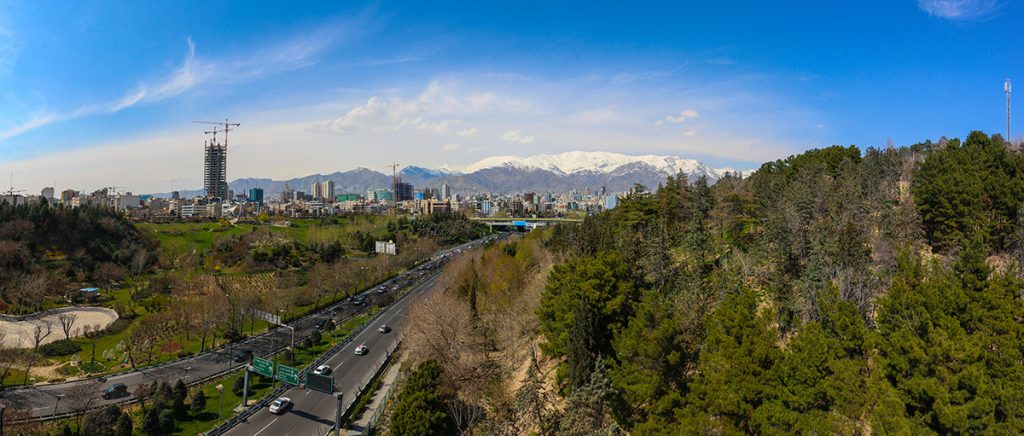
Most of the country is situated on the Iranian Plateau (a geological formation in Western and Central Asia), except for the coastal regions at the Caspian Sea and the Khuzestan Province in the southwest at the Persian Gulf. The Zagros Mountains in the west form the largest mountain range in Iran, Iraq, and southeastern Turkey. In Iran’s north towers the Alborz mountain range that stretches from the borders of Azerbaijan along the western and entire southern coast of the Caspian Sea. Mount Damavand, at 5,610 m (18,410 ft), is Iran’s highest mountain located in the Alborz mountain range.
Iran has a population of 85 million people (as of 2021). The country’s largest city is Tehran, which also serves as its capital, as well as the political and economic centre of the country. Other major cities are Mashhad, Isfahan, Karaj, Tabriz, Shiraz, Ahvaz, and Qom.
Contrary to what is often believed, Iran’s chief spoken language is not Arabic, but Farsi (or Persian). Arabic is spoken, but chiefly in the south of the country on the Gulf. Other notable languages also include Kurdish, Azeri, Lur, Turkmen, Baluchi, Armenian and many more.
Most of the population of Iran is concentrated in the north, northwest, and west. The vast arid areas in the centre and east of the country, around the Dasht-e Kavir, the Great Salt Desert, and the stony deserts and dune fields of Dasht-e Lut have a much lower population density.
In Iran’s north, a narrow, fertile strip known for its quality tea, borders the Caspian Sea, while in the south, their lowlands rim the Persian Gulf and the Gulf of Oman. Most people in Iran generally live along the edges of a high plateau that runs through the middle of the country.
HISTORY
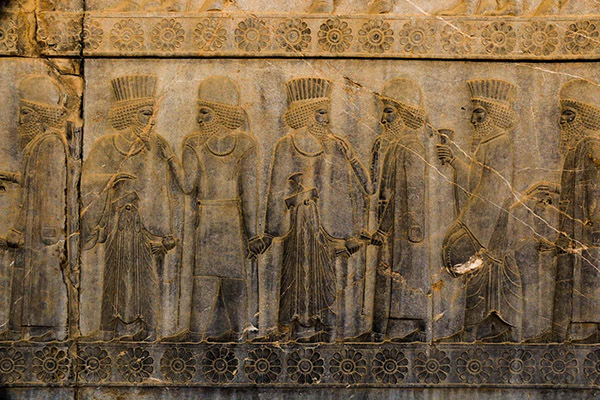
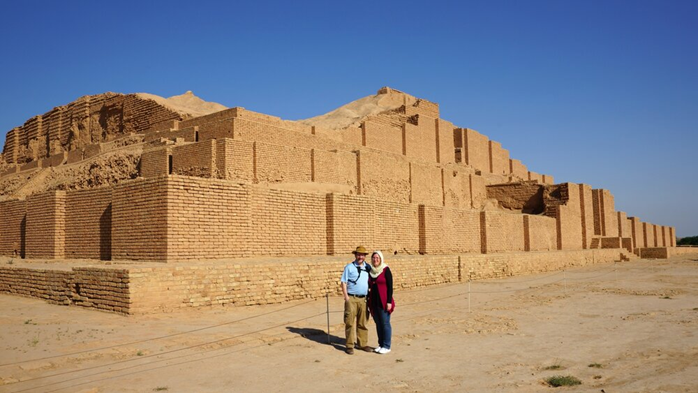
Iran is one of the oldest nations in the world, with a history dating back tens of thousands of years. The country’s first great city, Susa, was built on the central plateau around 3200 B.C.
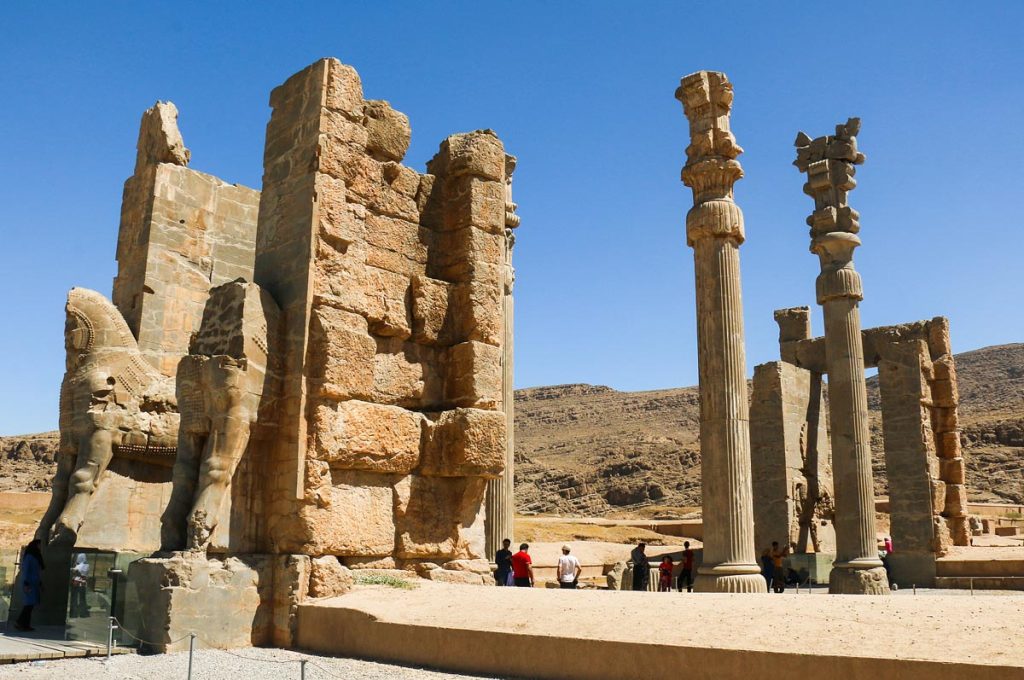
In 559 B.C., the Persian Empire, under the Achaemenid kings, arose in south-western Iran and conquered their neighbours in Mesopotamians, Anatolia, Syria, Egypt, and going as far as the Hindu Kush mountains in Pakistan. The empire eventually extended from the Mediterranean Sea to what is now Pakistan, but it was conquered by the Alexander the Great in 330 B.C.
Around 260 B.C., nomads called Parni ousted the Greeks, founded the Parthian dynasties and ruled for some 500 years. The Sassanids came into power in A.D. 224, and in A.D. 642, Persia finally became part of the Islamic Empire. In 1501, the kings, or Shahs, of the Safavid Empire began their reign, changing the country’s official religion to Shia Islam.
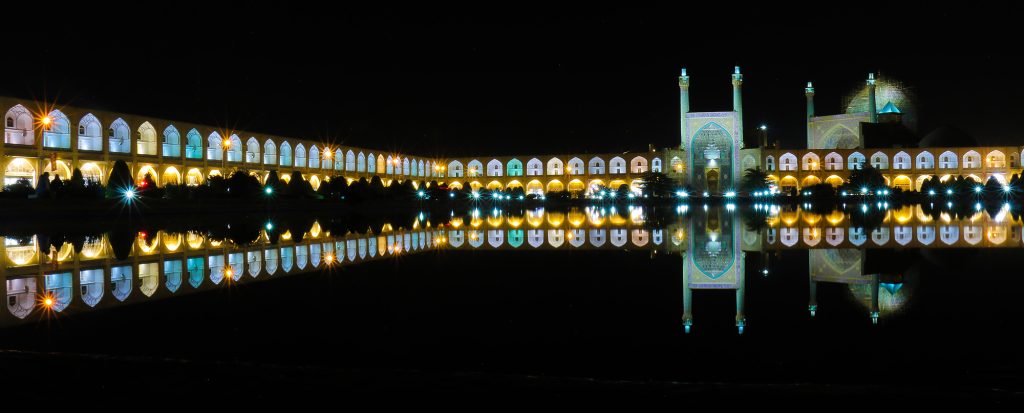
In the late 18th century, a coalition of foreign powers, including Russia and Britain, took control of parts of Persia. In 1921, a Persian army officer named Reza Khan seized control of the country, and sought to end outside influence, and in 1935 he officially renamed the country to Iran. His son, Mohammad Reza Pahlavi succeeded him became Shah in 1941.
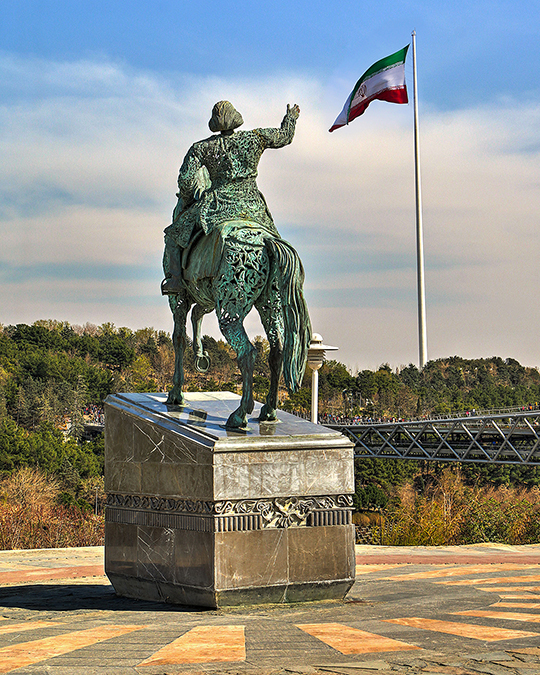
In 1979 however, many Iranians who felt Pahlavi was corrupt forced him to flee, ending the reign of the Shahs in Iran. Since then, religious leaders have ruled the country. The first was Ayatollah Ruhollah Khomeini, who was in turn succeeded by Ayatollah Ali Khamenei in 1989.
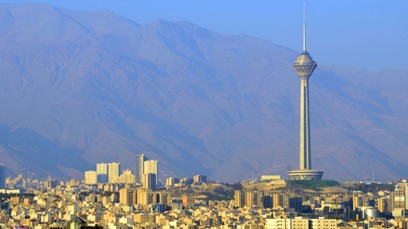
Tehran
PHOTOGRAPH BY SURONIN, DREAMSTIME
PEOPLE & CULTURE
Strong religious beliefs have always been part of Iranians’ lives for thousands of years. Most Iranians are Muslim, but the country also has Christian, Zoroastrian and even Jewish minorities that are part of the country’s history and respected.
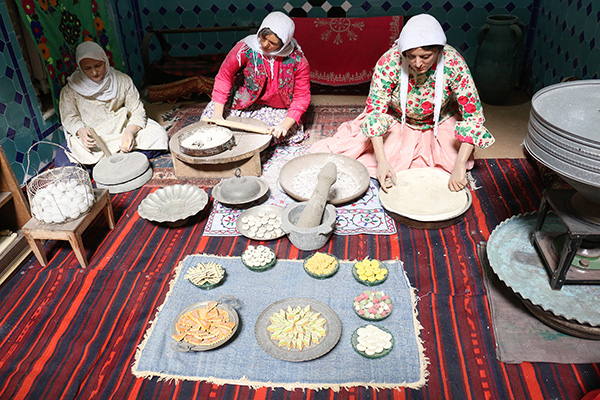
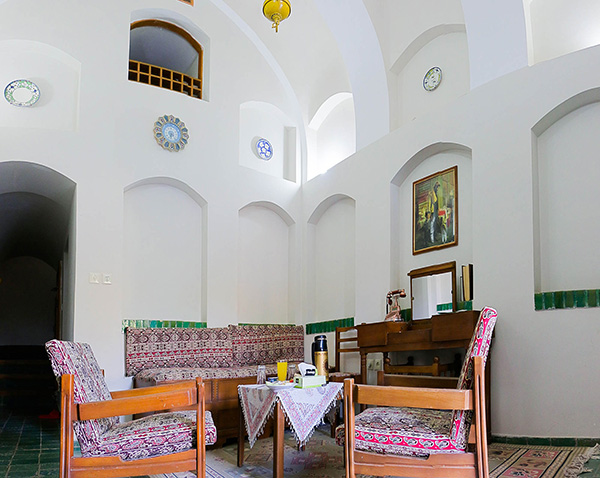
Iran also has a long illustrious history of scholarship that has created a rich culture of art, literature, poetry, music, cuisine, and architecture. Ancient Iranian thinkers wrote influential texts on philosophy and medicine, and it was an Iranian mathematician (Muhammad ibn Musa al-Khwarizmi) who invented modern algebra. Iran’s universities are also among the most respected in the Middle East, if not the world.